Showing posts with label environment. Show all posts

Thursday, November 5, 2009

Well at least we are number one at something--Atlanta Named Most Toxic U.S. City,

?

Las Vegas has far from a clean reputation, but in Forbes' list of America's Most Toxic Cities, Las Vegas is named the least toxic of 40 major metropolitan areas.

Forbes ranked the cities based on the number of Superfund sites in the principal city, number of facilities that release toxic chemicals, amount of toxic chemicals released in the area and air quality ranking.

Following Las Vegas as the top 10 least toxic cities are Sacramento, Riverside, Austin, Seattle, San Diego, Virginia Beach, San Jose, New York and Phoenix.

Surprised to see a major city like New York in the top ten cleanest? Forbes explains:

Crowded urban areas are often thought of as the most polluted, but the latter isn't always caused by the former. While the Atlanta metro area takes top honors for toxicity, don't blame the city alone. The Atlanta metro includes the cities of Sandy Springs and Marietta, the sites of chemical plants, metal coaters and concrete factories. The cities have toxic-release levels equal at or higher than those Atlanta, in spite of populations that are 15% and 13% the size of Atlanta's, respectively.

The title of most toxic city goes to Atlanta, followed by Detroit, Houston, Chicago, Philadelphia, Cleveland, Los Angeles, Jacksonville, Baltimore and Portland.

In some cases it's not the main city itself that is to blame for poor air or dirty water. As Forbes explains, much of the pollution for some cities comes from factories and plants in surrounding areas.

"...while the Philadelphia metro area is our fourth most toxic area, the City of Brotherly Love doesn't hold the bulk of the blame for the pollution. Factories in smaller Wilmington, Del., in the same metro area, reported releasing 57% more pounds of toxins than Philadelphia in 2007. Wilmington houses a Pepsi bottler and General Motors assembly plant, as well as the headquarters of chemical company Dupont."
The most toxic cities:
1. Atlanta-Sandy Springs-Marietta
2. Detroit-Warren-Livonia
3. Chicago-Naperville-Joliet
4. Houston-Sugar Land-Baytown
5. Philadelphia-Camden-Wilmington
6. Cleveland-Elyria-Mentor
7. Los Angeles-Long Beach-Santa Ana
8. Jacksonville
9. Baltimore-Towson
10. Portland-Vancouver-Beaverton

The least toxic cities:
1. Las Vegas-Paradise
2. Sacramento--Arden-Arcade--Roseville
3. Riverside-San Bernardino-Ontario
4. Austin-Round Rock
5. Seattle-Tacoma-Bellevue
6. San Diego-Carlsbad-San Marcos
7. Virginia Beach-Norfolk-Newport News
8. San Jose-Sunnyvale-Santa Clara
9. New York-Northern New Jersey-Long Island
10. Phoenix-Mesa-Scottsdale

Thursday, May 7, 2009

UMD students Rally to save 9 acres


?


Davey Rogner (left) and Clark DeLong in the wooded area the university plans to clear. (Baltimore Sun photo / May 6, 2009)

The University of Maryland, College Park aspires to be one of the "greenest" institutions of higher education in the country and plans to celebrate Friday its designation as an arboretum and "tree campus."But some students and professors say the administration is missing the forest for the trees by planning to bulldoze nearly 9 acres of woods on the sprawling 1,400-acre campus to make way for maintenance sheds, a mail-handling depot and a parking lot for the university's buses and trucks.


"The university says they're going to become carbon neutral by 2050, but they make a decision to cut down 9 acres of forest on the campus," said Davey Rogner, a senior from Silver Spring who's majoring in environmental restoration.He and others plan to stage what one student leader called a "protestabration" Friday at the arboretum festivities, to highlight their concerns about how the loss of the woods conflicts with the university's commitment to the environment.

University officials say they need to use most of the 15-acre wooded hill behind the Comcast Center to relocate support facilities that are to be displaced by the redevelopment on east campus that will bring more stores, eateries, entertainment and graduate student housing. They say putting the maintenance operations anywhere but on the wooded tract would be too costly or pose too many environmental problems.


Anne G. Wylie, vice president for administrative affairs, suggests it's the critics, not the administration, who might need a refresher class in sustainability."This is a very complicated problem," she said, adding that she sees no conflict between bulldozing woods and the university's campaign to be rated one of the nation's greenest schools. The overall aim is to develop a more compact, walkable campus and reduce the amount of driving by students, faculty and staff, she explained. "It's not just about preserving trees."


A delegation of students, faculty and outside environmentalists met with Wylie on Wednesday afternoon, and she said afterward that she's willing to consider any alternatives they suggest. The bulldozer is "many, many months away," she said, though the university is nearing an agreement with a developer to proceed with the east campus project.


The campus festivities Friday will mark the first year of the college's arboretum designation, awarded by the American Public Gardens Association, that recognizes commitment to public education about trees and their value; and a "tree campus" designation from the Arbor Day Foundation.In addition, College Park currently is in second place in a nationwide contest to be declared "America's Greenest Campus." The competition, sponsored by a pair of green companies, aims to get students, faculty and staff to reduce their carbon footprint and use less energy.The east campus redevelopment has been in planning for years, but the fate of the woods became an issue in February, when some students learned of the facility relocation plan and questioned it. The student government association unanimously adopted a resolution calling for an independent review of the issue."It's in our strategic plan, in our climate action plan, in our facilities plan that we will preserve green space and will do everything we can to have carbon-neutral development," said Joanna Calabrese, student government senior vice president and a junior from Columbia. "This goes against everything we stand for - at least as far as we can tell."Some professors and students say the woods are a valuable teaching laboratory as well as a precious natural resource.Ray Weil, a professor of soil science, said he takes his classes to the woods to study the soil and how it functions in an ecosystem. The university dug him a "soil pit" there a few years ago so students could examine the layers of dirt beneath the surface. The ground contains Sassafras soil, Maryland's official state soil, Weil said."There are very little of the natural woods left," said Weil. "It does seem like a shame to put yet more paved parking surface on campus when we have so much of it."Joe Sullivan, associate professor of plant science and landscape architecture, said he holds class behind Comcast as well to let students see how forests grow and how they recover from natural catastrophes. A tornado that ripped through campus in 2001, killing two students, tore out and damaged trees."It's very nice to have a lab within walking distance where we can go out and see native species, the forest growth pattern and the structure of the [tree] canopy," he said.Sullivan said he and other faculty members intend to join students Saturday for a teach-in of sorts about the ecological functions and values of the woods.Other faculty members are trying to steer clear of the controversy.


Marla McIntosh, a professor of urban forestry and director of the university's arboretum and botanical garden, said she's focused on researching the thousands of trees on campus and developing them better as a teaching tool. So far, some 7,000 trees have been identified, she said, and school officials are putting up signs to identify 56 different ones along a marked "tree walk."McIntosh said she hasn't become involved in the university's development plans but doesn't see a disconnect between leveling the woods and being committed to sustainability."As an urban forester, the concept of wanting to keep contiguous space I wholly believe in," she said. "But sometimes things just don't work out."

Wednesday, April 22, 2009

Find and reduce your Carbon Footprint

?

Carbon footprint

From Wikipedia, the free encyclopedia

A carbon footprint is “the total set of GHG (greenhouse gas) emissions caused directly and indirectly by an individual, organization, event or product” (UK Carbon Trust 2008). An individual, nation or organization's carbon footprint is measured by undertaking a GHG emissions assessment. Once the size of a carbon footprint is known, a strategy can be devised to reduce it.

Carbon offsets, or the mitigation of carbon emissions through the development of alternative projects such as solar or wind energy or reforestation, represent one way of managing a carbon footprint.

The concept and name of the carbon footprint originates from the ecological footprint[1] The carbon footprint is a subset of the ecological footprint. discussion.


CarbonFootprint.com and Nature.org offer CarbonFootprint calculators, the Nature.org site is easier to navigate and is ran by The Nature Conservancy.
Carbon Footprint: Get Started
Carbon Footprint: Home Energy
Carbon Footprint: Driving and Flying
Carbon Footprint: Food and Diet
Carbon Footprint: Recycling and Waste
Results: What's My Carbon Footprint?
Please choose "Calculate for Me Only" or "Calculate for My Household".


Carbon Footprint Calculator: What's My Carbon Footprint?

Inevitably, in going about our daily lives — commuting, sheltering our families, eating — each of us contributes to the greenhouse gas emissions that are causing climate change. Yet, there are many things each of us, as individuals, can do to reduce our carbon emissions. The choices we make in our homes, our travel, the food we eat, and what we buy and throw away all influence our carbon footprint and can help ensure a stable climate for future generations.

Use The Nature Conservancy's carbon footprint calculator to measure your impact on our climate. Our carbon footprint calculator estimates how many tons of carbon dioxide and other greenhouse gases your choices create each year. more info

To get started, select the number of people in your home. Then choose whether you want to calculate a carbon footprint for yourself or for your household.

Please select the number of people in your household.

There are people in my household.

Calculate my carbon footprintCalculate my household carbon footprint


MY RESULTS
_____________________________________________

Your Results (calculated carbon footprint for me only)
Emissions Comparison Tons of CO2 eq/year
26
Your Estimated Emissions
27
United States Average per Person
5.5
World Average per Person
Your estimated greenhouse gas emissions are 26 tons of carbon dioxide (CO2) equivalent per year, which is below the U.S. national average.

To reduce your climate impact, there are many simple things you can change in your everyday behavior that will make a big difference in the fight to slow climate change: Offsetting your carbon footprint with The Nature Conservancy will sequester carbon over the next 70 years. Learn more about the Conservancy's science-based carbon offsets program.

U.S. Average Behavior Breakdown
Driving & Flying (44.3%)
Recycling & Waste (4.4%)
Food & Diet (15.1%)
Home Energy (36.2%)
Your Behavior Breakdown
Driving & Flying (21.6%)
Recycling & Waste (2.2%)
Food & Diet (12.7%)
Home Energy (63.4%)
*sorry i couldn't get the pie charts and graphics to transfer over but you get the idea right? Go to the site and do one for your self. It takes no more than three minutes.

Wednesday, April 8, 2009

EPD Environmental Poser Disorder

?
By LaChaBenn for LaChaBenn.com


Environmental Poser Disorder: (noun) \in-ˈvī-rə(n-mənt(n)-'tal\ \ˈpō-zər\ orgin lachabenn

Environmental posers are the biggest threat to the environment. EPs commit to sporadic "large" acts towards helping the planet but do not make changes in everyday life. It is easy to over come EPD. In some cases EPD can be treated by simple changes in habits. In moderate to severe cases of EPD intervention is needed. Its time for every individual to take responsibility and action to protect this planet. Confront a friend, or confront self.
Side effects to EPD include


  • leaving the faucets on while brushing teeth,
  • passing by/ignoring liter in the neighborhood
  • leaving bathroom fans on and house lights on upwards to 12 hours for zero reason
  • throwing cigarette butts out of car windows and into lawns
  • Using large amounts of waste products: access toilet paper, paper towels, doing access laundry runs at high temps and water levels


There is Help

~Take a Leave No Trace Course

~Don't leave the water on full pressure for anything- leave the water running for one minute full pressure you are using up to five gallons of clean H2O.

~Turn lights off when you leave the room don't run unnecessary appliance for unnecessary amounts of time. If you own a home invest in energy efficient appliances and receive a tax credit at the end of the year AND save money and energy every month. If you rent trying buying fluorescent bulb. They use a fifth of energy and a tenth of the heat to generate the same amount of light as traditional incandescent bulb
~Keep a cigarette butt container near your popular smoking areas, use the container NOT mother
earth. Cigarettes are not Biodegradable. EVER


~Commit to a Conservation Corps (like MCC, CYCC, SCC) or a clean up project at a local water way or park

~Use Cloth bags at the grocery store. You already have a ton of plastic bags at home? Some markets collect and recycle used plastic bags.

Don't Pose, admit if you are unclear on what steps you can take to save the environment for that is the first step!


peace!


Tuesday, March 10, 2009

100,000 plastic bottles=one awesome vessel

?
SAN FRANCISCO, California (CNN) -- Imagine collecting thousands of empty plastic bottles, lashing them together to make a boat and sailing the thing from California to Australia, a journey of 11,000 miles through treacherous seas.
This 60-foot sailboat, the Plastiki, is being built from more than 12,000 recycled plastic bottles.

You'd have to be crazy, or trying to make a point. David de Rothschild is trying to make a point.

De Rothschild hopes his one-of-a-kind vessel, now being built on a San Francisco pier, will boost recycling of plastic bottles, which he says are a symbol of global waste. Except for the masts, which are metal, everything on the 60-foot catamaran is made from recycled plastic.

"It's all sail power," he said. "The idea is to put no kind of pollution back into the atmosphere, or into our oceans for that matter, so everything on the boat will be composted. Everything will be recycled. Even the vessel is going to end up being recycled when we finish."

De Rothschild's vessel, scheduled to set sail from San Francisco in April, is called the Plastiki. Its name is an homage of sorts to Thor Heyerdahl, the fabled Norwegian explorer who in 1947 sailed 4,300 miles across the Pacific on the Kon-Tiki, a raft made from balsa wood.

Wednesday, February 25, 2009

Gendersite.org

?

Gendersite.org

The definitive online resource for gender and the built environment

Read the Gendersite feature in January 2009's issue of US magazine Architect here

Watch the Gendersite launch event report here now

Everyone involved in the built environment world tries to meet the needs of their clients. Child-sized furniture is designed for nurseries, disabled parking bays are located next to entrances, sheltered housing sites are planned near post offices and shops. However people are often unaware of the needs of a majority of the population; women. With the introduction of the Gender Equality Duty there is now a legal obligation to consider those needs.

Gendersite provides a route to all the information needed to gain a better understanding of gender issues in the built environment. The site lists books, bibliographies, broadcasts, conference papers, journals, reports, unpublished PhDs and more. Just choose the keyword (from the drop-down menu) that is most relevant to your project or area of interest.

We welcome your feedback on the website. Please also send us links to any research not yet included in our database. Email gendersite@wds.org.uk

Database researched by Dr Clare Melhuish. This project was supported by the UCL-led UrbanBuzz Programme, within which UEL is a prime partner


Monday, January 26, 2009

little info from the USDOE

?

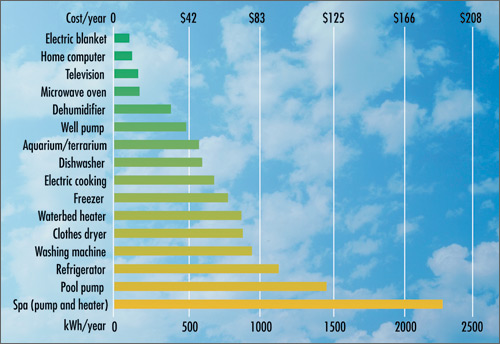
my roommate has been randomly drying clothes for the last two hours...i promise the clothes were dry sometime during the first half an hour...upside? the sound of a dyer is soothing. Downside? energy, environment, money.

What's a kilowatt?

When you use electricity to cook a pot of rice for 1 hour, you use 1000 watt-hours of electricity! One thousand watt-hours equals 1 kilowatt-hour, or 1 kWh. Your utility bill usually shows what you are charged for the kilowatt-hours you use. The average residential rate is 8.3 cents per kWh. A typical U.S. household consumes about 11,000 kWh per year, costing an average of $900 annually.

Tuesday, April 22, 2008

Dear Camel,

?
I appreciate the coupons in the mail,
They save me much needed green.
But the coupons inside of an empty camel pack inside an empty box within a box is just to much,
Thank you for saving me money, but please save some trees.
Send me my coupons in an envelope please.

Sincerely,
LaChaBenn